Roof Cleaning
Removing black streaks and moss from shingles with no pressure, so the granules stay where they belong.
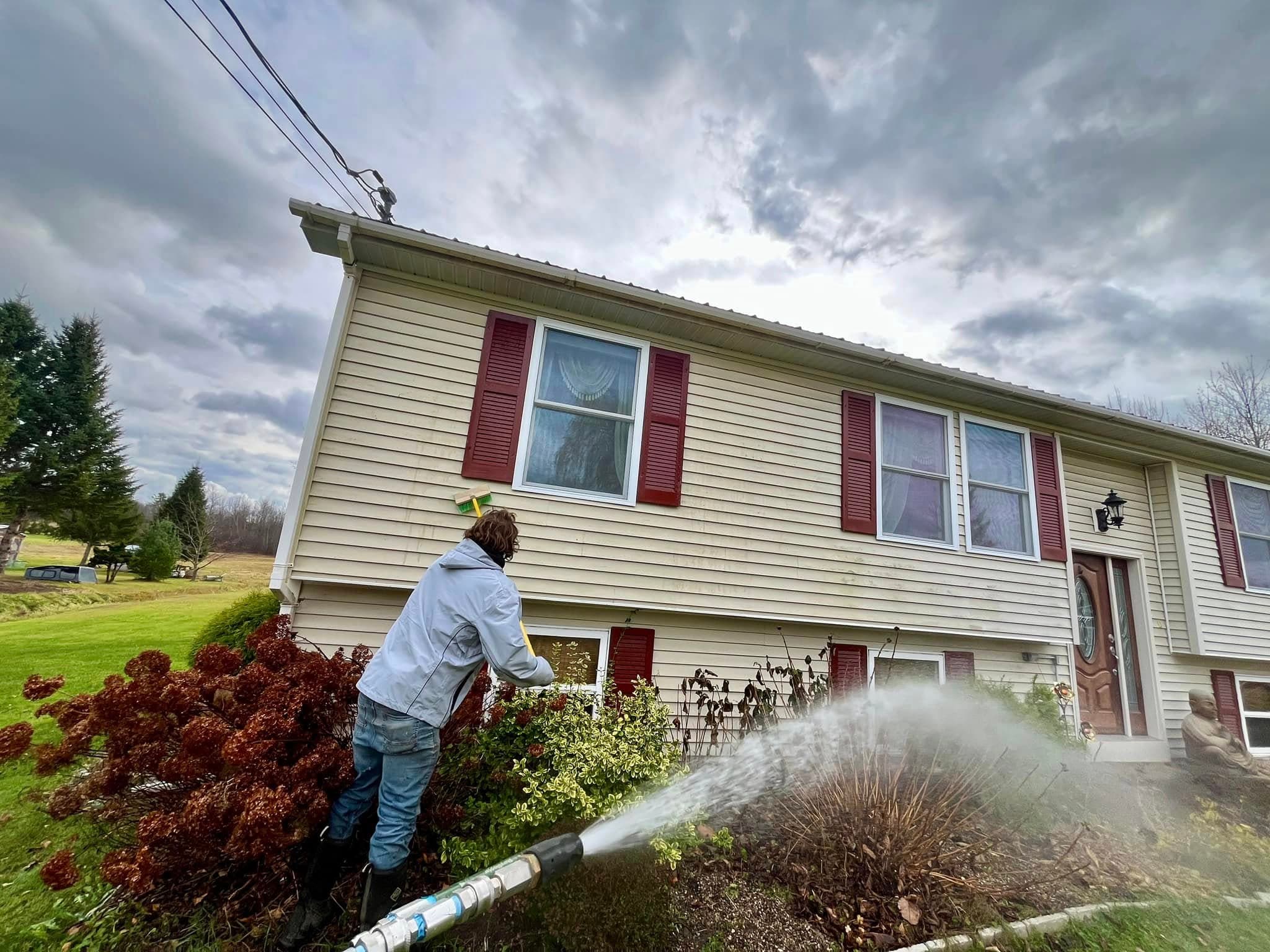
Those black streaks running down an asphalt roof aren't dirt and they won't wash off in the rain. They're gloeocapsa magma, a hardy algae that feeds on the limestone filler in modern shingles and spreads across damp, shaded roofs — exactly the conditions the Adirondacks provide for most of the year.
Left alone it holds moisture against the shingle, which shortens roof life and can void some manufacturer warranties. It also cannot be pressure washed off: pressure strips the protective granules and does more damage than the algae ever would. We use the low-pressure, solution-based method the asphalt shingle manufacturers themselves specify.
What's included
- No pressure on the shingle — granules stay intact
- Kills the algae and moss rather than just rinsing the colour away
- Follows the manufacturer-approved approach for asphalt shingles
- Gutters and downspouts flushed afterwards
- Landscaping below the roofline protected and rinsed
How the job runs
- 1Inspect the roof and note any lifted, cracked or missing shingles before we touch it
- 2Cover and pre-wet plantings below the drip line
- 3Apply the cleaning solution at low pressure across the affected slopes
- 4Let it work — streaking continues to fade over the following days and rainfalls
- 5Flush gutters and downspouts, then rinse the surrounding area
Common questions
Why not just pressure wash the roof?
Because pressure blasts the granules off the shingle. Those granules are the roof's UV protection, and once they're gone the shingle degrades quickly. Every asphalt shingle manufacturer we know of specifies low-pressure chemical cleaning instead.
How soon will the streaks disappear?
Some of it lifts while we're there, but the rest keeps fading over the next couple of weeks as rain rinses the dead algae away. A roof that still looks patchy on the day is usually completely clear a fortnight later.
Will it come back?
Eventually — it's airborne and this climate suits it. Most roofs here stay clear for around three to five years, longer on open, sunny slopes and shorter under heavy tree cover.
Other services
House Washing
Low-pressure soft washing that lifts algae, mildew and grime from siding without forcing water behind it.
Deck & Patio
Bringing grey, weathered wood and stained stone back, and prepping wood properly if you're staining after.
Driveway & Walkway
Concrete, pavers and walkways cleaned evenly — no zebra stripes, no blown-out joint sand.
Gutter Cleaning
Clearing gutters out and washing the black streaking off the faces so they actually look clean.
Commercial
Storefronts, sidewalks, parking areas and building exteriors — scheduled around your opening hours.